Art Toronto’s Evolving Role in Canada’s Art Landscape

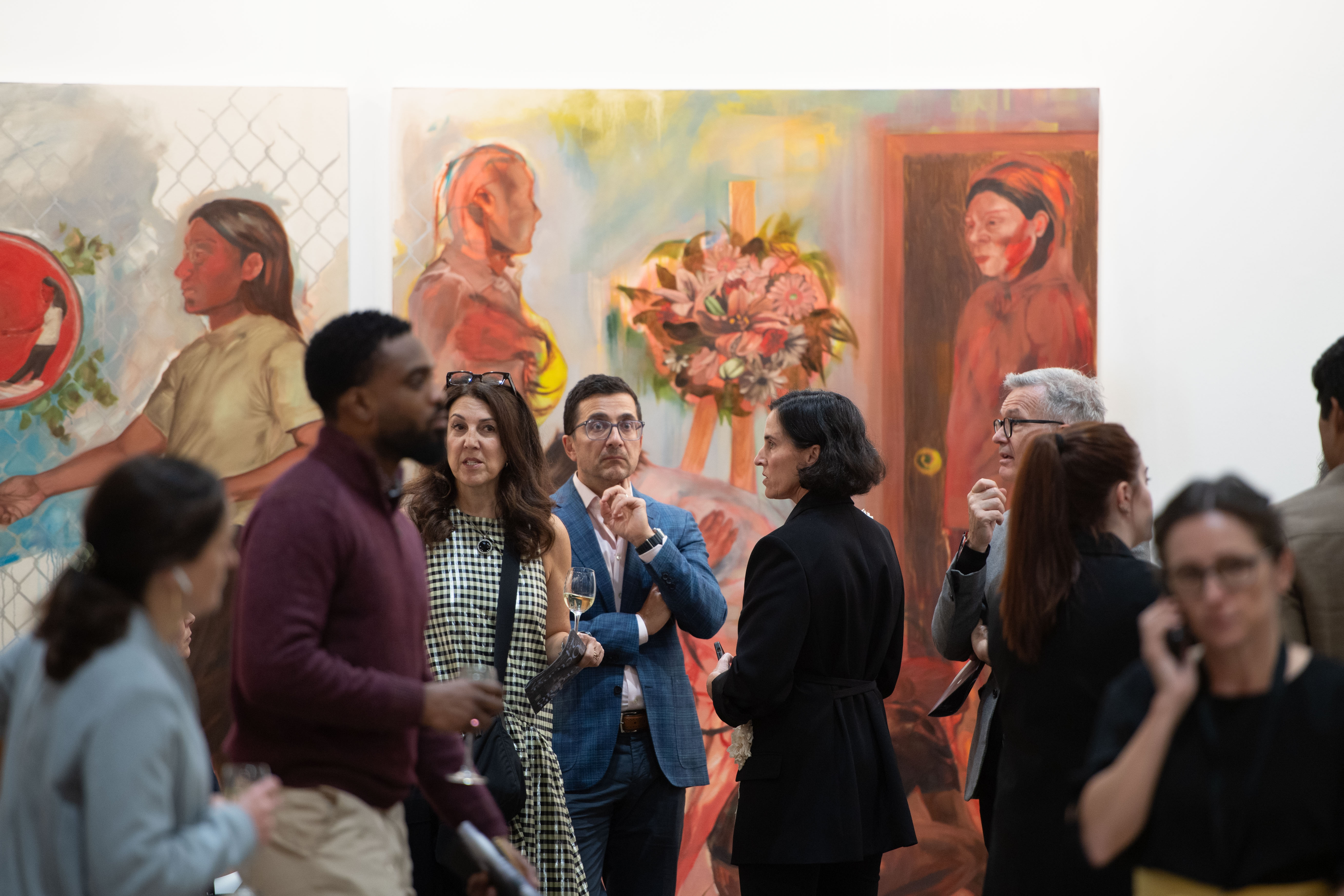
In a rapidly evolving art landscape, Art Toronto is leading the way in promoting cultural diversity and inclusivity. With fair director Mia Nielsen, we explore the vision for this year's event, celebrating its 25th anniversary. With a strong emphasis on showcasing Indigenous artists alongside a broader array of international voices, Mia shares her insights on how Art Toronto is both reflecting and actively shaping the future of contemporary art in Canada. As collectors, artists, and galleries gather for Canada’s oldest and largest international art fair, we delve into its commitment to nurturing a vibrant and diverse cultural scene.
Carol: As Art Toronto celebrates its 25th anniversary, what are some of the highlights of this year's event?
Mia: There are a few things we're really excited about for this year. First of all is the curated exhibition by Rhéanne Chartrand. She is a Métis curator. She is the Hatch Curator of Indigenous Art & Culture at the Royal Ontario Museum. That's her day job. And she's put together a beautiful museum quality show of works by indigenous and diverse BIPOC artists that all explore notions of ‘home’. It’s a beautiful, very sensitive exhibition that just looks at all the manifold ways that we can think of home from the home we grew up in, the one we go back to every night, the earth as our home. So, we're really excited about that. These are artists who are represented by our galleries, so it creates an immersive experience to investigate works that are in the show outside of our exhibitors' booths.
We also have an exhibition called Reconnecting. This is inspired by the 25th anniversary of the fair and reflects on how the screen has transformed our interaction with art. It's remarkable how we can now connect with art from around the world so easily. When we view artworks online, they often appear flattened and lose their depth and texture. To address this, the exhibition features large-scale installations - pieces that are either too big to be fully captured in a single photo, too detailed to be appreciated in a mere image, or possess textures and moving aspects that cannot be conveyed digitally, so this is really about encouraging a face-to-face experience.
Carol: What do you think are some of the impacts of technology on the art market?
Mia: Being able to connect with art and discover new artists from other places is an incredible benefit of technology and our current times. The ease of purchasing art online makes it accessible to people who might be unfamiliar with galleries or who don't live near them. There are certainly many benefits to the online access we have. However, it's still very special to experience art in person, to see works that can't be fully appreciated on a flat screen.
Carol: Another exciting exhibition you mentioned focuses on Indigenous and diverse BIPOC artists, which is a particularly relevant and important topic today. How does Art Toronto address this issue?
Mia: What truly sets Art Toronto apart from other fairs around the world is the significant presence of Indigenous artists. The market for Indigenous art in Canada is very strong, and this uniqueness is something that our audience can experience at our show, making it stand out. It's also exciting to see the growing response to Indigenous art internationally, such as Jeffrey Gibson's work at the US Pavilion in the Venice Biennale. People are becoming increasingly connected and curious about art from Indigenous communities, and it's thrilling to showcase the richness of this work at the fair.
Carol: As the director of the art fair, how do you balance the diverse voices of such a rich cultural community when curating the booths and galleries?
Mia: Canada is particularly interesting because it is such a multicultural nation, and we are currently witnessing a generation of some of our most celebrated artists emerging from immigrant communities. For example, artists like Rajni Perera and Lotus Laurie Kang, who may have been born elsewhere but were raised in Canada, are deeply connected to both Canadian culture and their own heritage. They blend these narratives in innovative ways that push their respective mediums forward.
As Art Toronto is an international fair, we are also excited to collaborate with galleries from around the world—whether from Argentina, South Korea, or Europe. This year, we have a gallery joining us from New York: Efraín López, who is Puerto Rican. All of these diverse voices contribute to the richness of the show.
Carol: What are some of the notable new trends you've seen among collectors, particularly regarding themes or subject matter?
Mia: One notable trend is the rise of textile-based and ceramic works, which have gained significant popularity over the past two to three years. Many artists are exploring traditional techniques but in innovative ways, effectively pushing these mediums forward. This evolution reflects a growing interest in the versatility and artistic potential of textiles and ceramics.
It's just fascinating to see the boundaries between traditional categories of art and functional objects begin to dissolve. Artists are pushing these media to new heights, infusing their work with historical traditions, political commentary, and a rich array of cultural narratives. This transformation allows us to reconsider what we typically associate with traditional mediums like ceramics and textiles, enriching their significance and impact.
Carol: So Art Toronto serves as a vital intermediary between the commercial market and artists. In light of the noticeable shifts in collectors' preferences for specific genres and subject matters, what advice would you offer to artists?
Mia: I always encourage artists to pursue what they feel they need to create. Making work specifically for the market can be quite challenging, as it’s difficult to predict its direction. When artists focus on current market trends, they often end up creating for a market that may already be fading. Instead, artists should prioritize their own vision and let the market catch up with them. It’s important to give themselves the freedom to explore and create work that may lie outside market demands if that’s what they feel compelled to do.
Carol: I think it’s also important to remember that art is inherently subjective. Artists infuse their personalities, life experiences, and perspectives into their work. If they solely chase trends, they risk losing that personal touch, and the artwork may no longer reflect their authentic selves or experiences.
Mia: That's right. Yeah, I totally agree with that.
Carol: Are there any particular galleries or artists you would recommend seeing this year, especially those that are new to Art Toronto or have recently joined the family?
Mia: Absolutely, I have a few recommendations. First, Gio Swaybe is an important artist to watch. She is represented by Claire Oliver Gallery in New York and is joining us for the first time. She has some real notoriety in the States. Although Gio is Canadian, she has limited exhibition history in Canada, so it’s exciting to see her work featured here.
Another notable artist is Braxton Garneau, a young talent based in Edmonton, who is represented by Efraín López de Galars from Puerto Rico. Braxton’s work is really amazing; he paints with other elements but also incorporates asphalt into his paintings, I've never seen anything like it. It's really, really tremendous.
We have another gallery from Reykjavik joining us this year called Tula, which promises to showcase a lot of new and exciting work. There’s plenty to look forward to this year!
Carol: As the fair continues to grow and influence our art community, what role do you see Art Toronto playing in fostering a more diverse cultural landscape in Canada? What are the goals for achieving this?
Mia: Toronto is such a unique place to discover works by Indigenous artists that will continue to be important going forward. Something that I think about a lot as I travel to see exhibitions and meet artists and go to galleries is the extraordinary quality of art that comes out of Canada and to see so many of our artists be recognized in a really important way on the international stage. So, I think the fair is an excellent place to discover and invest in art that is on the rise.
For more information, visit arttoronto.ca.
Related Posts